
Japan Is Easy with a Dairy Allergy. It’s Hard with a Fish Allergy.
A food allergy guide to eating out in Japan, written by a parent raising an allergic child here.
Please read first
This guide is written by a parent raising a child with a milk allergy in Japan. It is general information to help you prepare, not medical advice and not a safety guarantee. Ingredients and kitchen practices vary by restaurant and change without notice. Always confirm directly with staff, carry your prescribed emergency medication, and consult your doctor before travelling.
Last updated: August 22, 2026
Japan is one of the best countries in the world to visit with a dairy allergy. Traditional Japanese cooking uses almost no milk, butter or cheese.
It is one of the hardest countries to visit with a fish allergy.
Most travel guides don’t tell you this. I’m writing it because I’ve spent years reading Japanese allergen labels for my daughter, and the things that surprise visitors are almost never the things they expect.
One important limit: this applies to traditional Japanese food. Western-style chains, bakeries, cafés and convenience store desserts are a completely different situation, and dairy is everywhere in them.
The one thing to understand: dashi
If you read nothing else on this page, read this section.
Dashi (だし) is the stock that forms the base of an enormous share of Japanese cooking. It is most commonly made from katsuobushi — dried, fermented bonito, which is fish — often together with kombu seaweed.
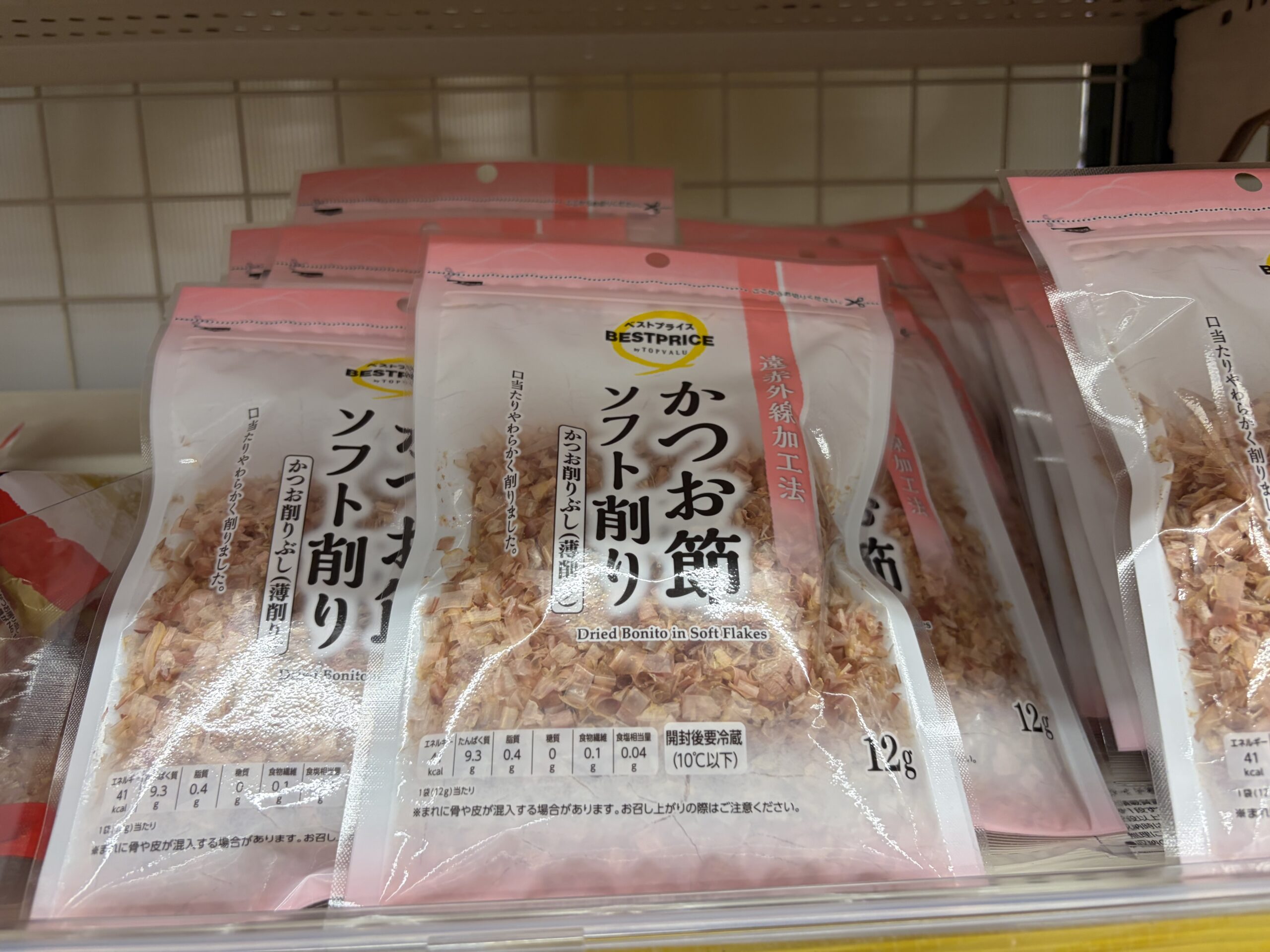
Dashi is in miso soup. It is in the broth of udon and soba. It is in simmered vegetables, in dipping sauces, in savoury egg custard, in the seasoning of countless dishes that contain no visible fish whatsoever.
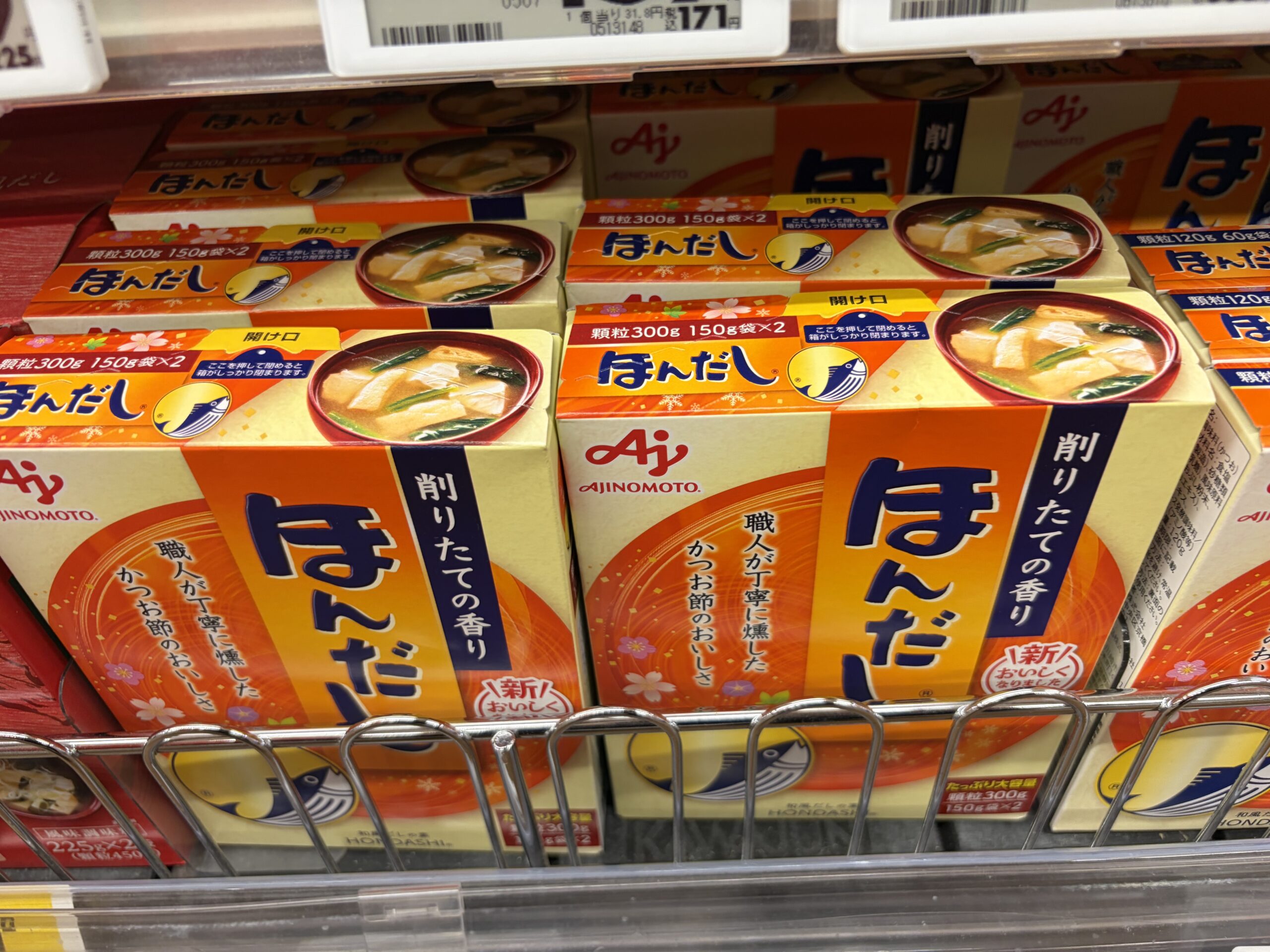
This is the single most common cause of accidental exposure for visitors with fish allergies. A bowl of vegetables in broth looks entirely safe. It usually is not.
Vegetarian dashi made from kombu or dried shiitake mushrooms does exist, but you must ask for it specifically. Do not assume that a vegetable dish is fish-free.
It’s also sprinkled on top of street food
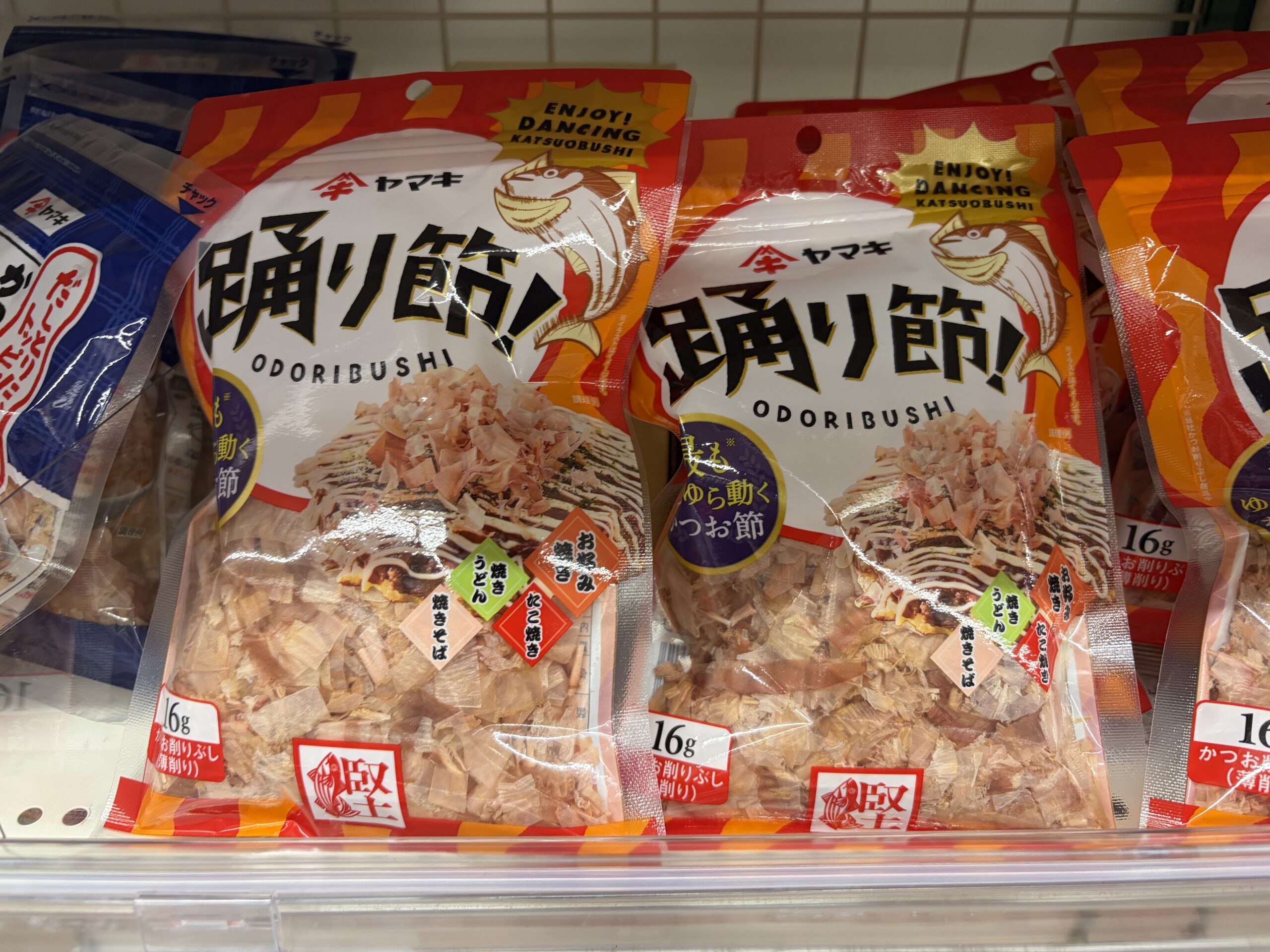
Okonomiyaki, takoyaki and yakisoba are among the first things most visitors eat in Japan. All three are commonly finished with a generous handful of bonito flakes — the thin shavings that appear to move in the heat.
You can ask for them to be left off. In Japanese: かつお節は抜いてください (katsuobushi wa nuite kudasai).
Other hidden allergens visitors don’t expect
Surimi products (fish paste)
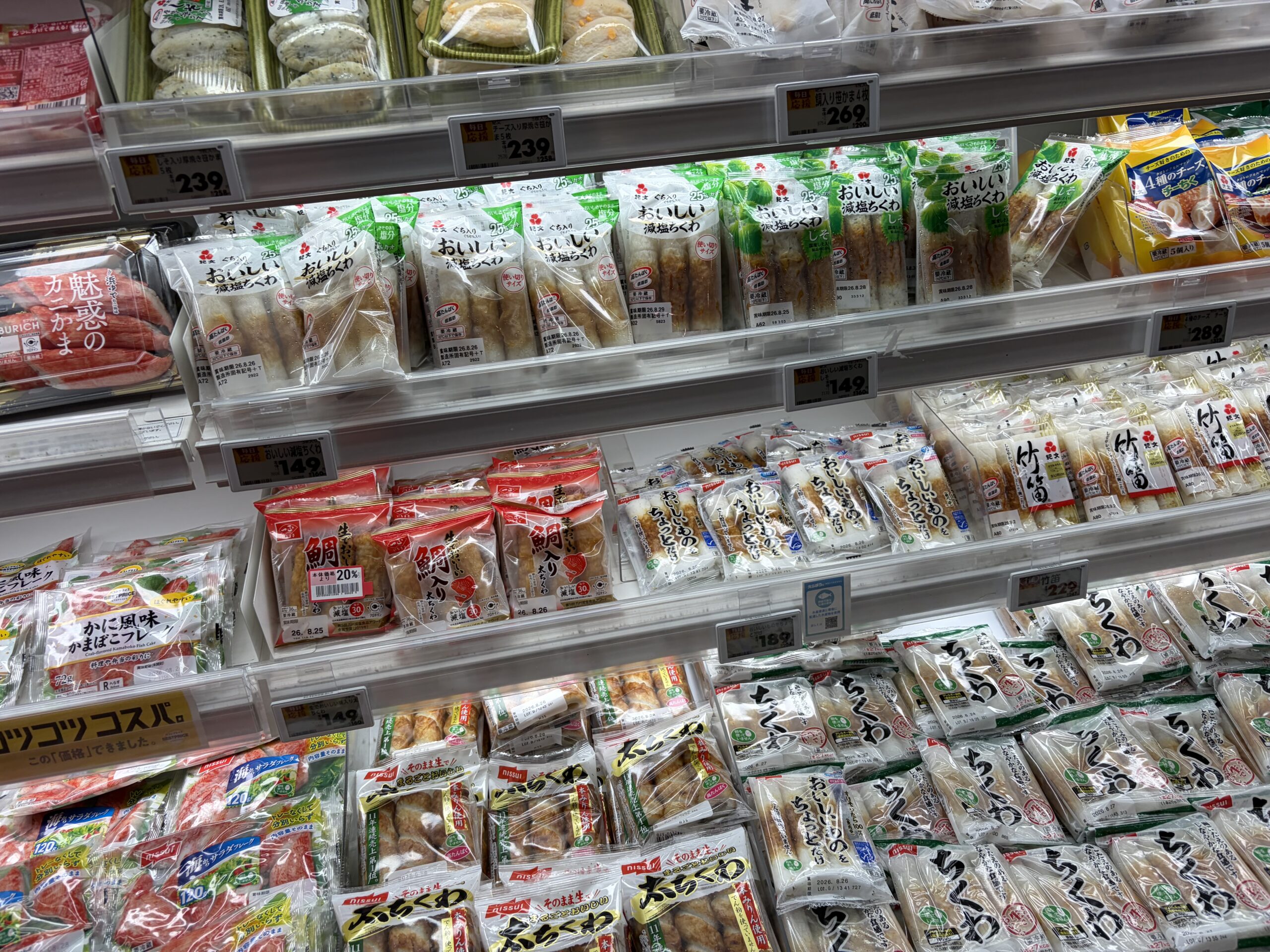
Kamaboko, chikuwa, hanpen, satsuma-age and imitation crab stick are all made from ground white fish. They appear as garnishes on ramen and udon, as ingredients in oden, in bento boxes, and in salads. They often look like processed white or pink cake, not like fish at all.
Imitation crab deserves a specific warning: it is fish, not crab — but some products also contain crab extract for flavour. It is unsafe for both fish and shellfish allergies.
Soba and shared cooking water
Buckwheat (soba) allergy is treated as a major, severe allergen in Japan — more so than in most Western countries. Many noodle shops cook soba and udon in the same water, so udon from a soba restaurant may not be safe. Soba-yu, the hot cooking water served at the end of a meal, is concentrated buckwheat.
Mirin and cooking sake
Most sweet-savoury Japanese sauces contain mirin (sweet rice wine) or cooking sake. Relevant if you avoid alcohol for medical, religious or personal reasons. Teriyaki, sukiyaki and most simmered dishes include it.
Soy and wheat are everywhere
Soy sauce contains both soy and wheat in its standard form. Since soy sauce is in nearly everything, soy and wheat allergies are genuinely difficult to manage in Japan. Wheat-free tamari exists but is not commonly used in restaurants.
How allergen labelling works in Japan
Japan legally requires labelling for a specific set of allergens on packaged foods, with a further list recommended but not mandatory. The mandatory group includes egg, milk, wheat, buckwheat, peanut, shrimp, crab and walnut.
Two things to know:
- Fish is not on the mandatory list. Salmon and mackerel appear on the recommended list, but fish in general — including dashi — may not be declared at all.
- Restaurants are not covered by this law. Labelling applies to packaged goods. Large chains publish allergen charts voluntarily; small independent restaurants usually have nothing.
This leads to a counterintuitive conclusion: large chain restaurants are often safer than small traditional ones, because their ingredients are standardised and their allergen information is published.
Japanese phrases that actually work
Showing written Japanese is far more reliable than speaking it. Screenshot this section before you travel.
- I have a serious food allergy.
重い食物アレルギーがあります。
Omoi shokumotsu arerugī ga arimasu. - May I see the allergen information?
アレルギー表を見せていただけますか?
Arerugī hyō o misete itadakemasu ka? - Does this contain dashi (fish stock)?
これに出汁(魚)は入っていますか?
Kore ni dashi (sakana) wa haitte imasu ka? - Please leave off the bonito flakes.
かつお節は抜いてください。
Katsuobushi wa nuite kudasai. - Please call an ambulance.
救急車を呼んでください。
Kyūkyūsha o yonde kudasai.
For allergens, use the Japanese word, not the English one. Milk is 乳 (nyū) or 乳製品 (nyū seihin). Egg is 卵 (tamago). Wheat is 小麦 (komugi). Buckwheat is そば (soba). Fish is 魚 (sakana).
One critical distinction: lactose-free is not milk-free. If you react to milk protein, ask for 乳成分不使用 (nyū seibun fushiyō, “no milk ingredients”). Do not use the word “lactose.”
Practical strategies
- Convenience stores are your friend. Every packaged item carries a legally required allergen label. When restaurants feel too uncertain, a konbini gives you readable information.
- Eat at chains when in doubt. Published allergen charts, standardised ingredients, staff used to handling questions.
- Ask before you sit down. Leaving is much easier before you have been seated and served.
- Carry your emergency medication and know how to call for help. The emergency number in Japan is 119 for ambulance and fire.
Restaurant guides
Detailed allergen guides for individual chains, based on published allergen information and my own visits:
[Internal links to chain articles go here]
I’m adding to this guide as we visit more places. If something here is wrong or out of date, please tell me — accuracy matters more than being comprehensive.

コメント